

By Honor Smith-Wright, Impact Writer
In the southern reaches of Kenya lies Kajiado County, a vibrant region shaped by lush national parks and the heritage of the Maasai community. But in recent years, Kajiado has also become a refuge for people fleeing violence and instability in neighboring countries—including Somalia, South Sudan, Burundi, Ethiopia, and the Democratic Republic of the Congo (DRC).
When people are forced to flee their homes, they often leave everything they own behind—small businesses, clothes, wealth, and farm animals. For families who owned and managed livestock in their home countries, their animals were both a way of life, and an important financial resource. Forced to leave their herds behind, many lose their life savings and an important avenue for generating income.
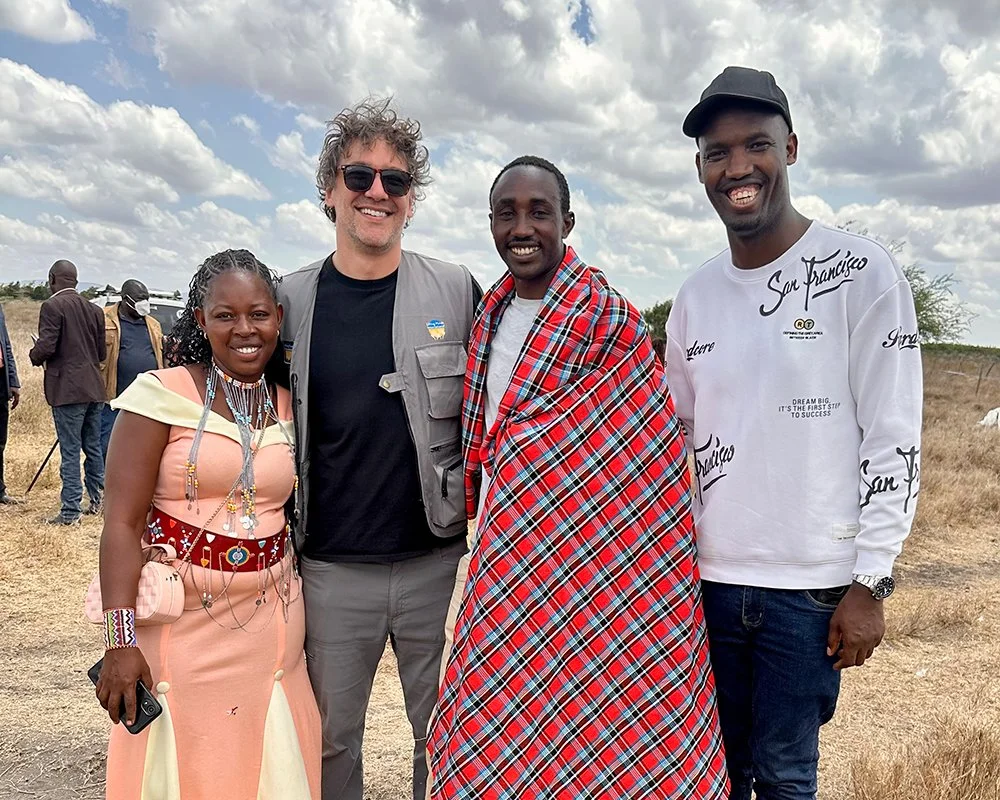
LHI COO Jaron visited Kenya for our first ever distribution there.
Last year, LHI launched a new chapter of the Animal Tracks program in Kajiado, to help families rebuild what they were forced to leave behind. In partnership with Give Refugees Hope International, we distributed 205 goats between 100 families, with extra males for breeding. In Kajiado, goats are both a source of milk and a valuable resource that can be bred and eventually sold, contributing to the money needed to rebuild lives after displacement.
Asa’s Story
Asa Nantor is one of the 4.5 million people displaced by two decades of armed conflict and insecurity in her native DRC. There are still over 100 armed groups fighting for control, forcing families to abandon their homes and search for safety elsewhere. Like many arriving in Kajiado, Asa was determined to provide her children with a stable education.
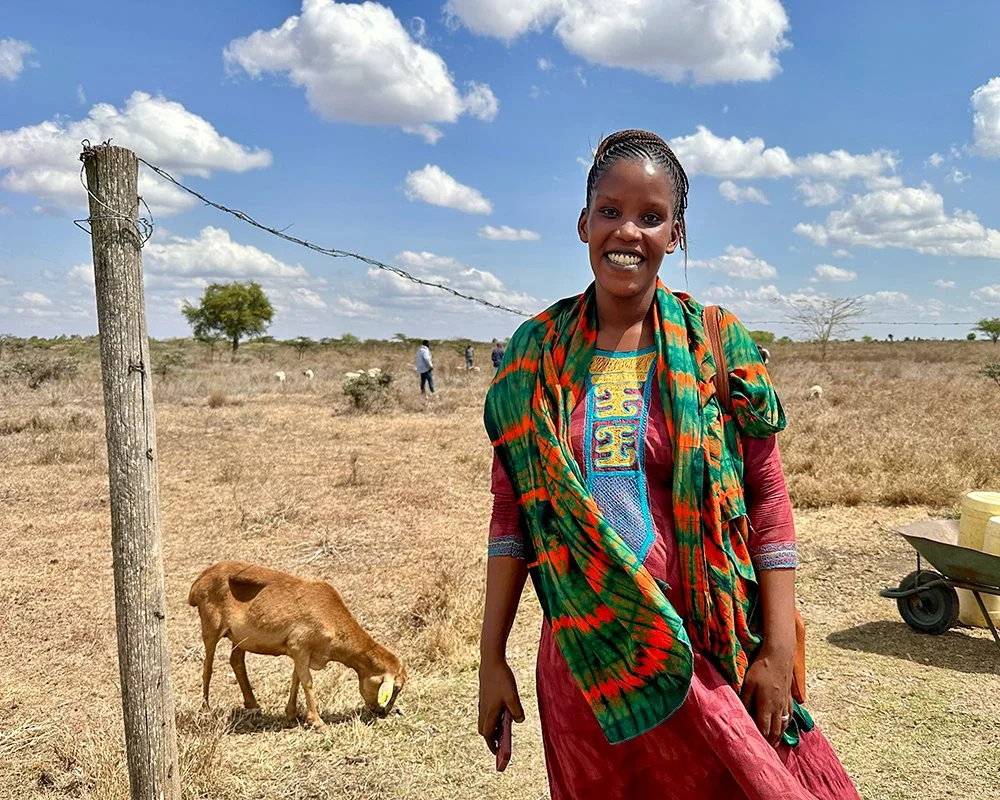
Asa is a soon to be mother of four who fled the DRC.
Having these goats helps Asa reclaim something that displacement usually takes away: the ability to make her own financial choices. In a new host community like Kajiado, where steady jobs are often hard to find, these animals act as a ‘village bank’. By breeding goats and selling the offspring, Asa can create her own paycheck—one that helps cover the cost of food and get the fees needed to get her children into school.
Asa is already putting this strategy to work. By using her existing skills to grow her herd, she isn’t just looking for a quick fix; she’s managing a long-term project for her family’s stability. As she explains:
“I’m going to wait to sell them, because I’m thinking of tomorrow and not today.”
This approach is often called the “ladder effect”. Someone starts with a goat, and the sale of its offspring can eventually allow them to purchase a cow, fund a small business, or invest in land. For Asa—pregnant and managing a household of three—owning a goat can act as a tool to help her carve out a more stable life.
“With our kids going to school, we’ll be able to afford things more than ever. I want to say thank you so much for sending these goats. We hope for things to get better.”
Why Goats?
While goats are chosen primarily for their resilience in Kajiado’s dry climate, they also offer a particular advantage for women’s autonomy. In many rural communities, large livestock like cattle are often seen as ‘men’s assets’, while smaller farm animals like goats fall under the care of women.
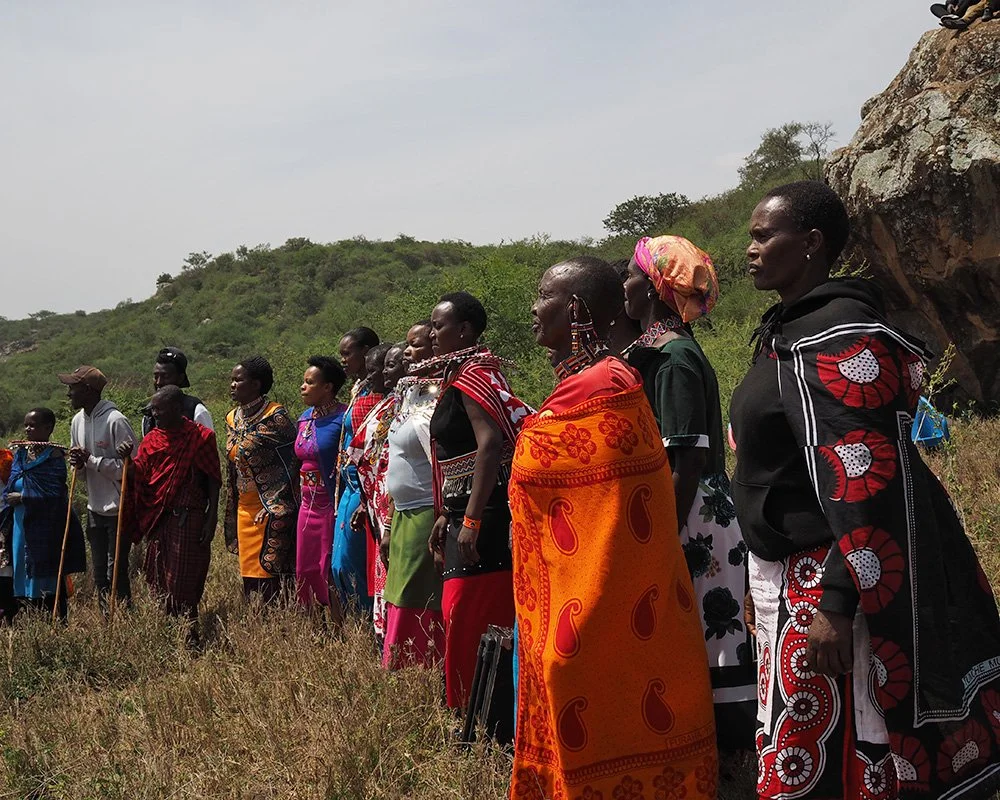
When refugee women are empowered, the whole community benefits and thrives.
By providing goats, the program taps directly into an economy women already manage and have the skills to grow. Goats are practical too. They can be managed from the kitchen garden and do not require lots of land—a big advantage for families living in crowded and resource-scarce areas. Even more importantly, goats reproduce quickly, often giving birth to twins or triplets. This fast growing herd acts as a reliable safety net, providing families like Asa’s with a clearer path toward the life they are working to build.
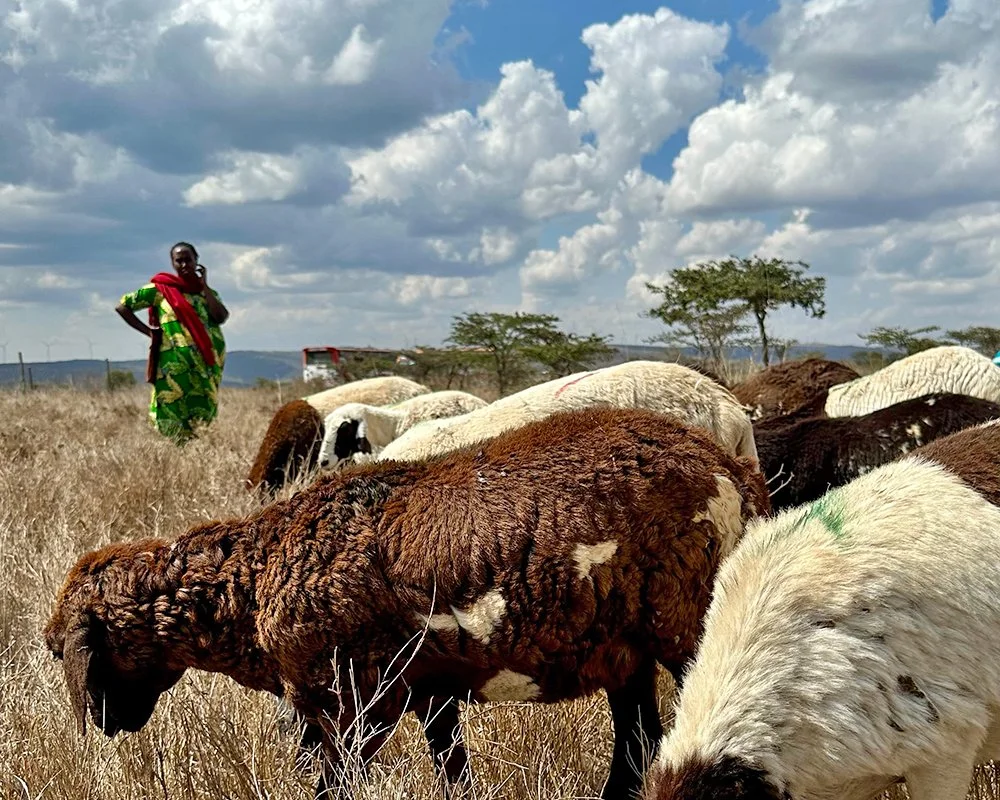
Since we started distributing farm animals for refugee families in 2017, we’ve helped thousands of people unlock opportunity and build brighter futures.
While both parents contribute, research shows that money controlled by women is more likely to be spent on the household and education. In this context, providing goats is an investment in a mother’s existing commitment to her children’s future. By facilitating a reliable source of income that women can manage themselves, the program supports their independence and can create a positive knock-on effect for the whole family. This could look like food on the table, a secure home, or a new uniform for that first day of school in Kajiado. As Asa told us:
“I’m so happy to be able to live in a country that’s safe, because now we’re in a home where we know we can make it to a better life, because those who can afford school fees can learn and study”
At its core, Animal Tracks is about more than livestock. It’s about restoring the agency that displacement often takes away. When you support this program, you aren't just giving a goat—you’re stabilising a family’s future and providing them with greater access to a vital childhood education.
SUPPORT THE PATH TO THE CLASSROOM
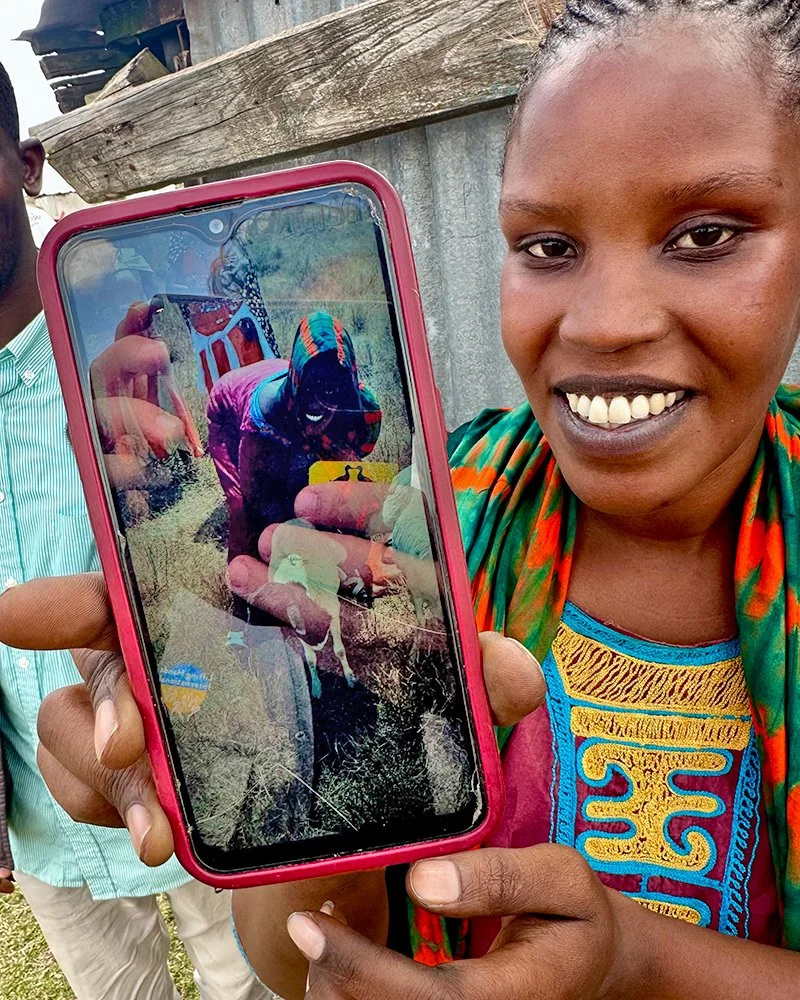
Asa smiling whilst showing us a photo of her new goat.
Honor Smith-Wright began her work with Lifting Hands International as a volunteer in Serres, Greece. She works in purpose-led communications, with a focus on platforming stories that drive systemic change. Honor now contributes to LHI as an Impact Writer.
Sources
Doss, C., Deere, C.D., Oduro, A.D. and Swaminathan, H. (2018). ‘Gender and asset ownership: A guide to collecting individual-level data’, World Development, 107, pp. 192-201. https://doi.org/10.1016/j.worlddev.2017.12.012
Galiè, A., Najjar, D., Petesch, P., Badstue, L. and Farnworth, C.R. (2022). ‘Livestock Innovations, Social Norms, and Women’s Empowerment in the Global South’, Sustainability, 14(7), p. 3741. https://doi.org/10.3390/su14073741
Holmann, F., Rivas, L., Urbina, N., Rivera, B., Giraldo, L.A., Guzman, S., Martinez, M., Medina, A. and Ramirez, G. (2005). ‘The role of livestock in poverty alleviation: An analysis of Colombia’, Livestock Research for Rural Development, 17(11). http://www.lrrd.org/lrrd17/1/holm17011.htm
ILRI (2003). Livestock, a pathway out of poverty: ILRI’s strategy to 2010. Nairobi: International Livestock Research Institute. https://assets.publishing.service.gov.uk/media/57a08ad7ed915d622c000935/Ilri_interim_strategy_2011.pdf
Maass, B.L., Chiuri, W., Zozo, R., Katunga, D., Metre, T.K. and Birachi, E. (2013). ‘Using the ‘livestock ladder’ as a means for poor crop–livestock farmers to exit poverty in Sud Kivu province, eastern DR Congo’, ResearchGate. https://www.researchgate.net/publication/260079653
Oluwatayo, I.B. and Oluwatayo, T.B. (2012). ‘Small Ruminants as a Source of Financial Security: A Case Study of Women in Rural Southwest Nigeria’, Journal of Agribusiness and Rural Development, 26(4), pp. 49-56. https://doi.org/10.17306/J.JARD.2018.00358
Quisumbing, A.R. and Maluccio, J.A. (2003). ‘Resources at Marriage and Intrahousehold Allocation: Evidence from Bangladesh, Ethiopia, Indonesia, and South Africa’, Oxford Bulletin of Economics and Statistics, 65(3), pp. 283-327. https://doi.org/10.1111/1468-0084.t01-1-00052