
By Anastasiia Shelukhina, LHI Ukraine Partnership Manager
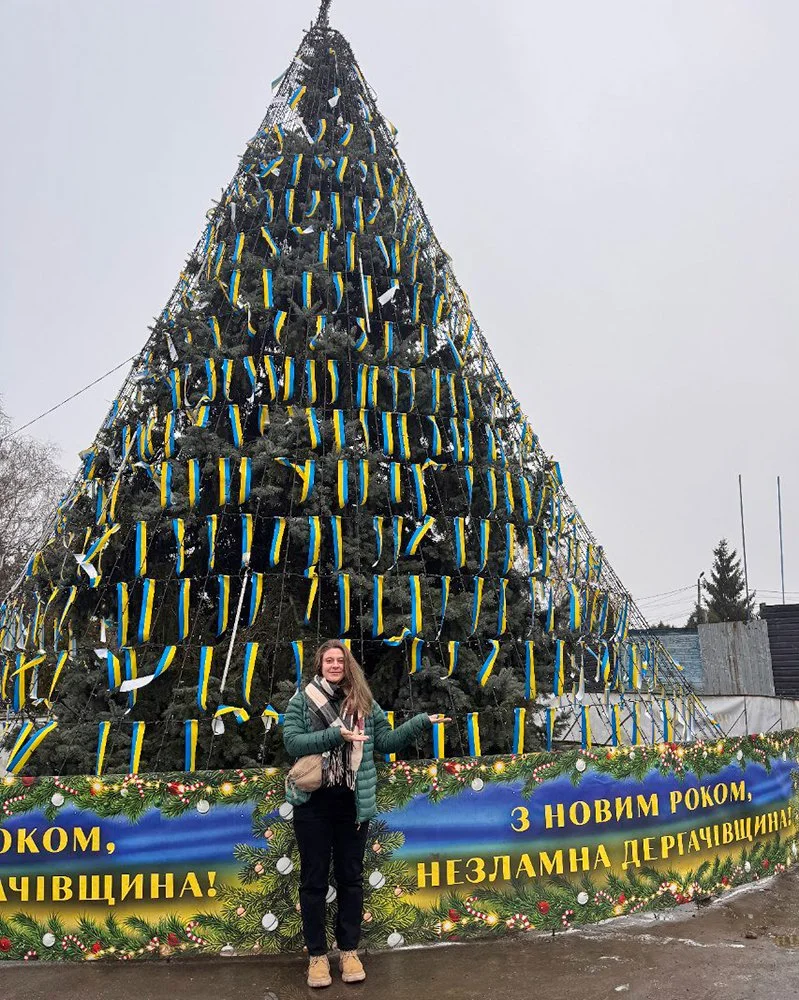
We visited Dergachi village in early December, right after Saint Nicholas day. Everywhere we looked, there were traces of what had been lost. One image stayed with me the most: a Christmas tree standing against the backdrop of a destroyed school. The contrast felt unreal and painful.
The village was liberated from Russian occupation back in 2022, but everything still seemed grey, as if the war had stolen all its color. There was no joy—only silence occasionally broken by the sounds of air raid sirens and fast moving military cars.

We went down to our shelter, the only place where activities continue for the town’s women and children. Here, our team hosts psychological support sessions for people to find a small sense of safety and hope.
One woman quietly agreed to talk to us, and with that, she opened the door to a story filled with pain and strength.
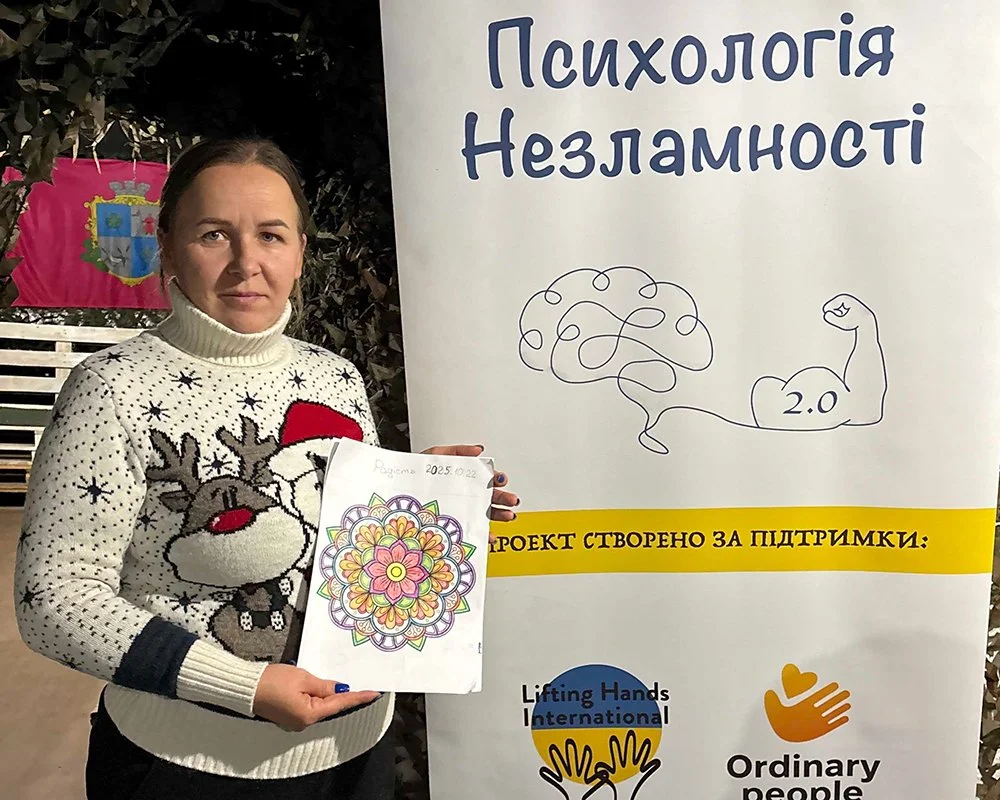
Her name is Svitlana, and she’s a 40 year old mother of three children—one daughter and two sons. Bohdan is nine, Daniil is 10, and her daughter is 17. Getting to Dergachi village took a long time and the pain of their journey still hasn’t faded.
They lived under occupation for two months in their hometown of Prudianka. A checkpoint was located close by, and Svitlana recalls a Russian sniper aiming at their home. They left in a rush. There was no time to think, only to escape. They left with almost nothing. No belongings, no toys.
For a while, they sheltered in a barn in nearby Zmiiv village, where volunteers brought beds and basic things. Later, they managed to move to Dergachi. As she talks about that time, she breaks down into tears.
The occupation left a deep mark, especially on her children. Bohdan was six years old at the time, and became so frightened that he began to wet himself on the road. The boys used to be full of energy, but now they’re quiet and closed off. Svitlana says her children understand too much. “They grew up too early,” she says. “They know there is no money for toys.”
Svitlana is divorced, and the children's father doesn’t help. She works to support her family on her own while silently carrying countless burdens. Her brother went missing in the war, and her mother is seriously ill with cancer.
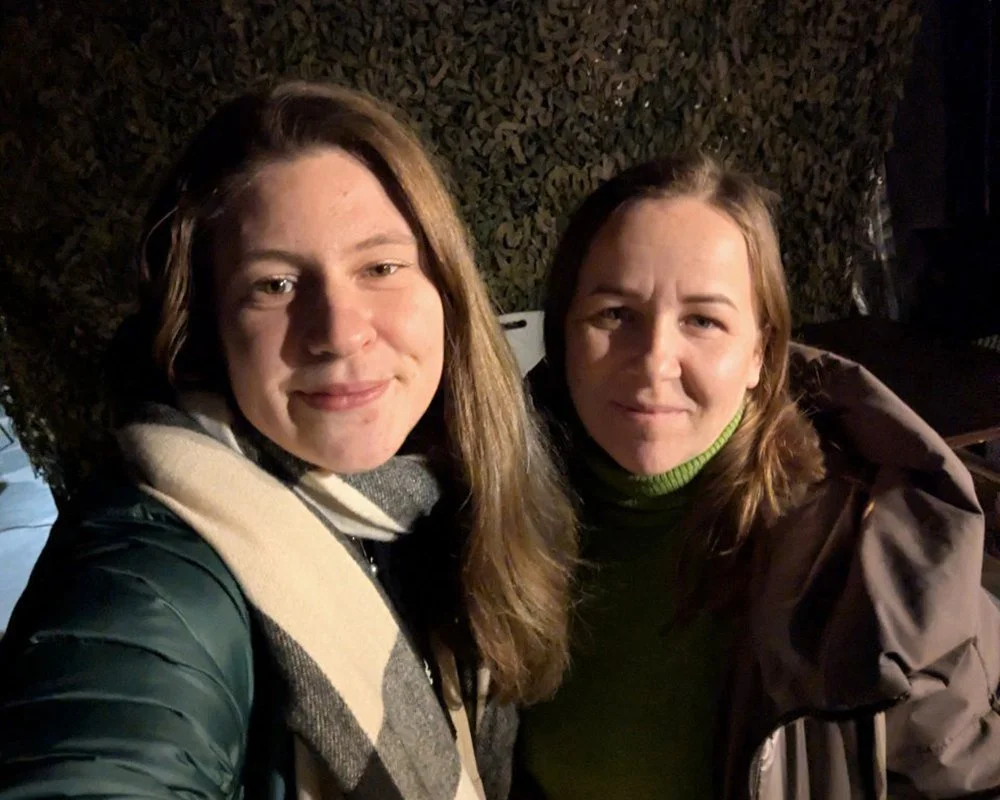
Before leaving, I thanked Svitlana for trusting me with her story and asked to take a selfie for a memory.
She tells me about her anxiety, loss, anger, and sense of injustice. Then she pauses and says she is still grateful. For being alive. For having her arms and legs. For having her children nearby and healthy.
She came to our local partner, Ordinary People, because the anxiety became too heavy. In the psychological support sessions, her children can receive therapy. She can meet with women holding similar pain. People understand each other without explanations. She carefully notes down everything she learns in the sessions. “Here, I feel like I’m not alone,” she says.
Svitlana feels safer in Dergachi, but understands that the war is far from over. It pains her to realize that her children are forced to grow up in such conditions. When she talks about her kids, she starts to cry again.
I told her where I was from and that my husband is in the military. We just hugged without words.
Svitlana’s story is one of so many we’ve heard in these communities. Stories about pain, but also about strength. About people who have survived the impossible and continue to live, even when life gives them no other choice.