
By Ihor Tereshchenko, LHI Ukraine Country Director
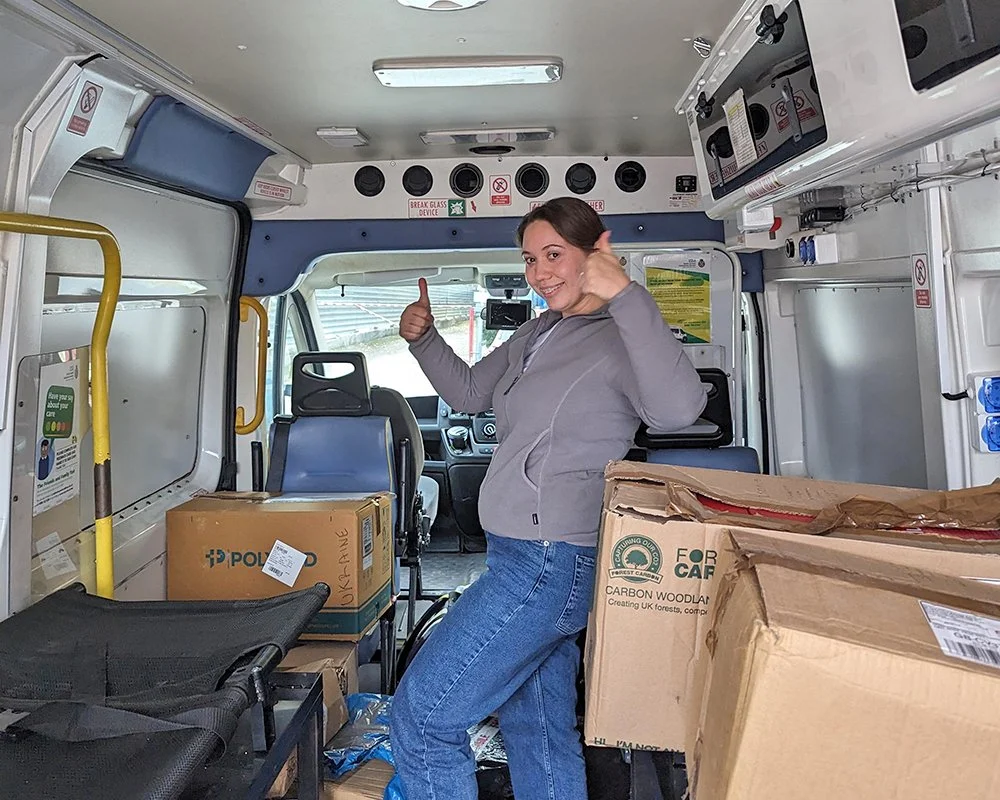
Maria and the UFH team risk their lives to reach communities living under the shadow of war.
For nearly four years, LHI has stood alongside local teams and NGOs in Ukraine. One of our partner organizations—Ukraine’s Frontline Hospitals (UFH)—delivers surgical tools and supplies to medical professionals stretched far beyond their limits.
In peacetime, surgery is planned, calm, and methodical. Doctors would help a car crash victim here or a burst appendix there. But now, airstrikes, missile attacks, and drone assaults are part of daily life. People are wounded constantly. A single ballistic missile strike might leave dozens critically injured. These hospitals—many of them underfunded even before the war—were never built to handle this level of trauma. They lack the space to treat large-scale injuries. If the hospital only has one or two operating rooms, people bleed out in the hallways as they wait for a chance at survival.
Another side of the crisis is technology—or rather, the lack of it. Doctors are often forced to operate using construction tools: hardware-store drills and hand saws. It’s just all they have. This is why UFH focuses on delivering high-quality equipment like laparoscopy tools, surgical and lasers to allow doctors to operate effectively and safely. With modern instruments, recovery takes days, not months. That’s the difference.
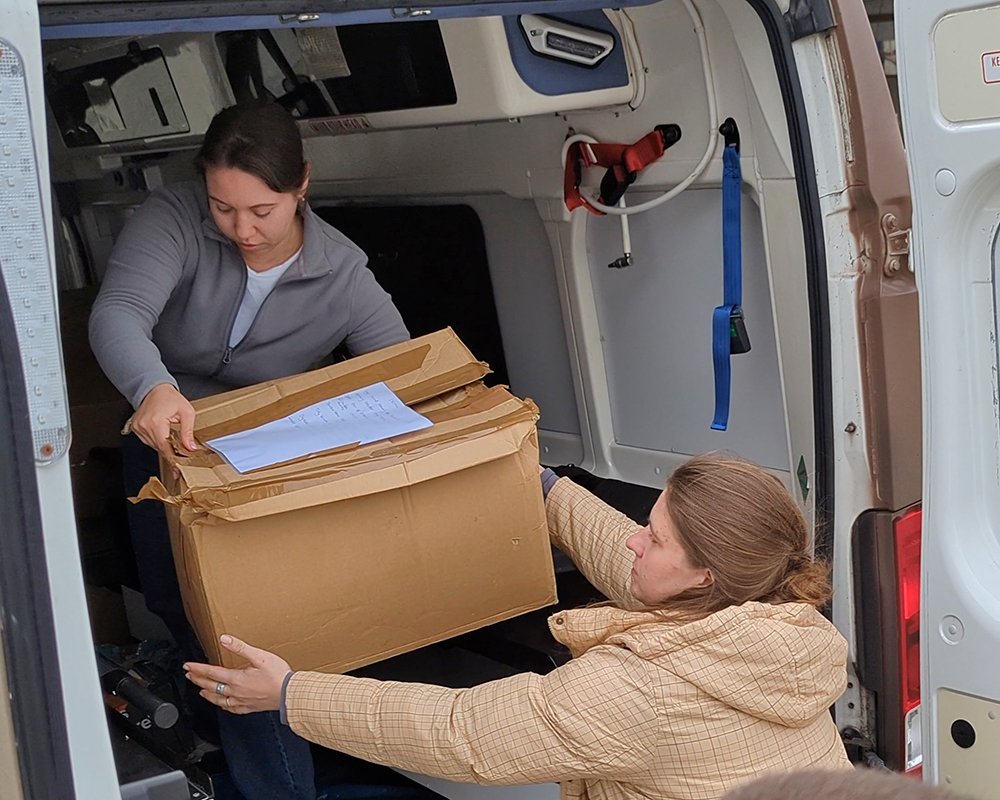
Together, we deliver aid that Ukraine’s doctors need to save lives.
This trip was about that mission. We left Kyiv at 5 AM. The city had finally fallen asleep after another long night of missile strikes. The air was cold. The car was quiet. But there was energy in the silence, a shared sense of purpose.
The further south we drove, the more the landscape changed into a post-apocalyptic film. Burned-out buildings, collapsed gas stations, roads torn apart.
We were delivering an ambulance to a group of frontline paramedics. The vehicle was retrofitted by volunteers to evacuate the wounded, because drones destroy medical vehicles faster than anyone can replace them. Paramedics now face the absurd reality of needing to dodge attacks just to rescue the injured. We planned to meet them in a small frontline village outside Dnipro.
But nothing goes smoothly this close to the front.
Darkness had fallen. Suddenly, an air raid alert. The GPS signal was gone; they turned it off to confuse incoming drones and missiles. We were stranded on an empty road with no idea which way to turn. We pulled over at the first sign of life: a gas station.
We asked the employee for directions. But before he could answer, the sky lit up, red-orange flashes, then thunderous booms. “They’re shooting down a ballistic missile,” he said quietly, then rushed back inside. We heard him tell the manager: “There’s a full fuel truck outside—cut the power, we might be a target.”
We got out of there.
Eventually, the paramedics, locals who knew the backroads, found us instead. They were elated, like kids on Christmas morning, to receive the ambulance. Their only wish was that it lasts long enough before becoming another target.
It was almost 8 PM when we got to our hotel in Dnipro. We were exhausted. No dinner. Just sleep.
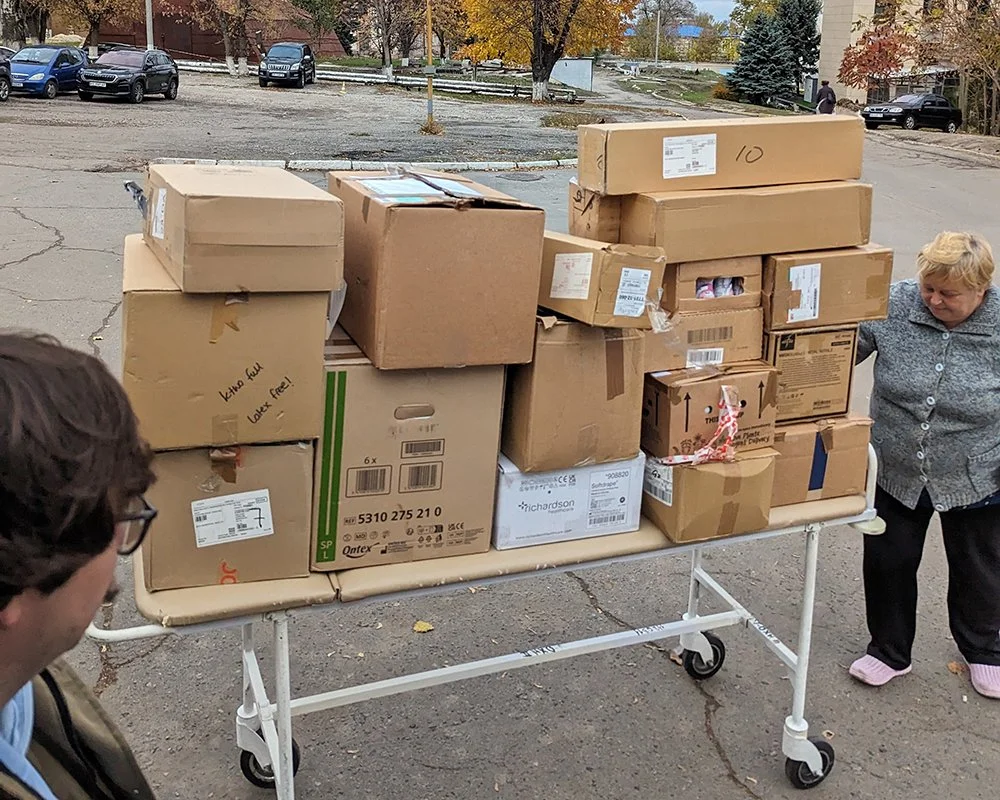
We worked quickly to deliver countless boxes of supplies and equipment.
The next morning, we hit the road again to one of the regional frontline hospitals in the Dnipro region. There, we met Roman, a young surgeon. No older than 30. Already gray-haired. He spoke slowly, deliberately—like someone surviving on sheer willpower.
He was alone, with the rest of the surgical team out on emergency calls. Roman gave a tired, dark smile: “Fewer patients now.” But not because the shelling had slowed down. “They’re dying before they reach us,” he said quietly. Drones hunt the roads now. They hunt the ambulances. For many medics rushing to save someone, the drive out in a rescue mission is a question mark. More and more trips toward the frontlines are one‑way journeys for them.
There are fewer doctors left, too. Many were conscripted to serve in military hospitals, where they’re needed to treat wounded soldiers. Those who remain work around the clock—without rest, without days off, and often without sleep. They survive on grit alone. They perform surgeries in underground rooms or hospital basements, where they relocate during shelling to avoid having to stop mid-operation. Just days before our visit, another missile strike caused a massive blackout, forcing a team of neurosurgeons to run their critical equipment on small power stations mid-surgery.
And then another chilling thought—not from Roman directly, but from the supply requests we’ve been seeing from hospitals across this entire region. Not long ago, they were asking for surgical lasers—precision tools for delicate operations.
Now? They’re asking for saws. For amputations. That’s what they need most now. Just to keep people alive at any cost.
We left Roman to his work. The drive back to Kyiv was long. Hundreds of kilometers and many hours stretched ahead of us. But we got home to our families, to electricity, to hospitals that still work. For now.